

Simplification, Integration and the Shift from Saving to Investment
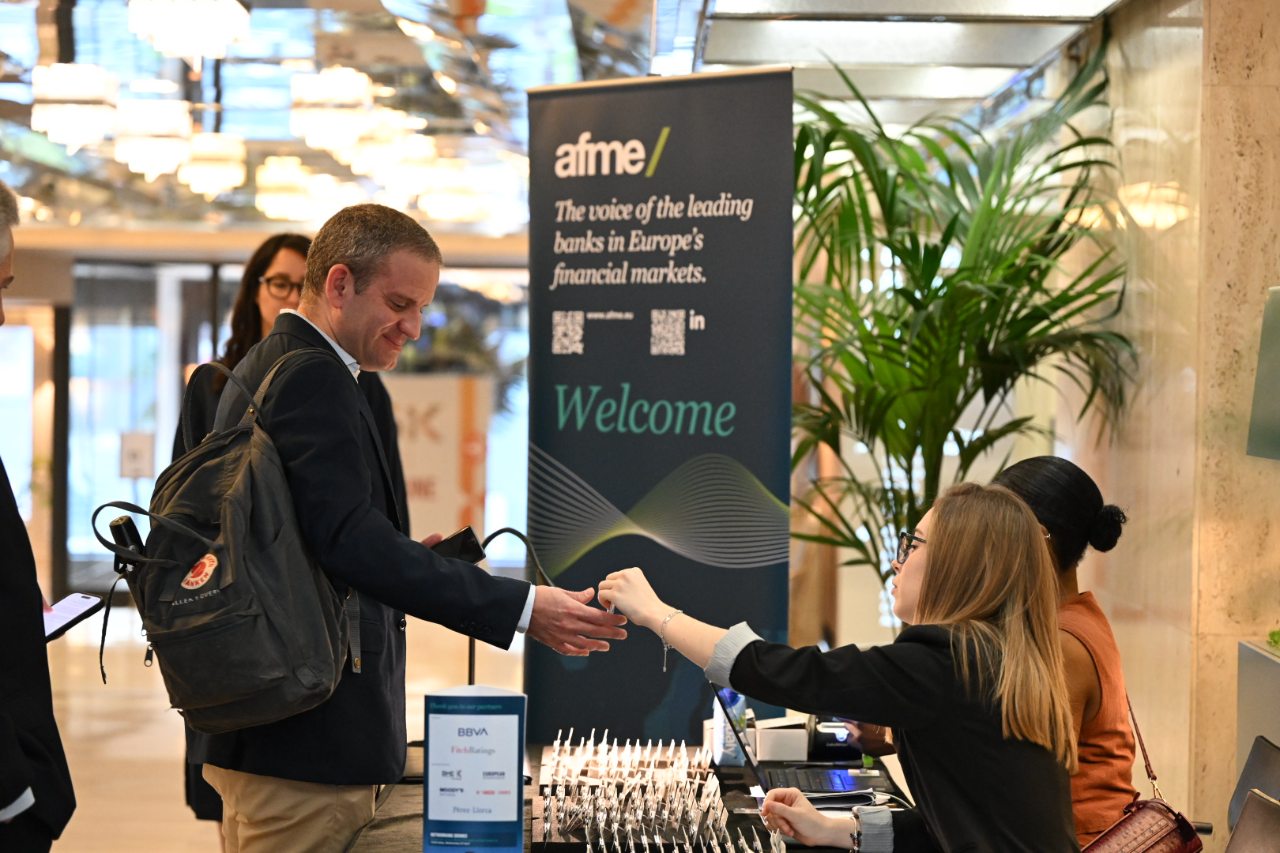
The message is clear: European capital markets must be simplified, integrated and made more efficient at mobilising savings if they are to support competitiveness, strategic autonomy and long-term growth. This is the main conclusion conveyed by regulators and market participants during the 17th Annual Capital Markets Conference in Spain, organised by AFME and held in Madrid on 22 April 2026. The debate also took place against a relatively positive backdrop for Spanish markets. In 2025, the IBEX 35® reached record highs; corporate fixed-income issues in the domestic market regained their appeal; and venture capital activity saw a marked acceleration.
However, the speakers emphasised that, despite the solid aggregate performance, significant structural weaknesses persist: a sustained decline in the number of listed companies, still limited liquidity levels, and low participation by Spanish households in the capital markets.
From UMC to UAI: A Strategic Shift
In his opening address, the Chairman of the CNMV, Carlos San Basilio, described the transition from the Capital Markets Union (CMU) to the Savings and Investment Union (SIU) as a matter of urgency, rather than a mere change of name. Europe, he stated, is “a continent of savers, but not of investors”, and its capital markets are still failing to fulfil their primary function: to efficiently channel savings into productive investment.
Two structural trends are causing particular concern. On the one hand, the Spanish equity market continues to see more delistings than new listings. Market capitalisation is growing, but driven primarily by price appreciation, not by a greater number of listed companies. On the other hand, liquidity is becoming increasingly fragmented, particularly affecting smaller listed companies and weakening investor engagement. Both dynamics can reinforce each other, eroding market depth.
The UAI was presented as the framework for addressing these challenges. San Basilio highlighted two central pillars:
- Market integration and supervisory convergence, aimed at reducing national discrepancies through a genuine single regulatory framework and a more consistent application of EU regulations.
- Simplification, focusing on rules that address real risks and eliminate unnecessary complexity.
Simplification was directly linked to competitiveness. Against a backdrop of geopolitical tensions, significant investment needs (energy, digitalisation, AI, defence) and a renewed industrial policy, capital markets must increase their contribution to growth and financial autonomy.

Mobilising Savings: The Role of the Retail Investor
A recurring theme throughout the day was the untapped potential of household savings. Juan Flames, CEO of BME, pointed out that European households hold more than €10 trillion in deposits, whilst financing needs are on the rise across Europe. Capital markets are the natural mechanism for bridging that gap. Today, only 12% of Spanish households own listed shares. Reversing this trend is therefore central to the UAI’s agenda, and one of the key steps is to adopt a Swedish-style individual investment account. He also indicated that this account should offer flexibility and tax incentives to attract more retail savings towards listed instruments.
Flames also emphasised that BME is aligned with the CNMV and the Government in promoting regulatory simplification and consistent supervision across Europe. He added that market integration must be both horizontal and vertical: not only harmonising rules between countries, but also recognising the importance of transparent public markets (stock exchanges) in price formation.
Furthermore, he noted that many of the proposals outlined in the OECD Capital Market Review of Spain, published in December 2024, reflect BME’s own White Paper on boosting the competitiveness of Spanish capital markets, and that some of the recommended measures have already been implemented, such as BME Easy Access and the approval of securities lending by Spanish collective investment undertakings (CIUs). Whilst acknowledging that “this is a process that will take time”, Flames expressed optimism that the implementation of these reforms will place Spain in a much stronger position in the coming years.
Susana de Antonio, Head of Equity Listings at BME, also reiterated BME’s proposal for Personal Investment Plans (PPI)*, designed to enable individuals to invest in different asset classes with minimal restrictions and clear incentives. Beyond taxation, she emphasised that rebuilding retail participation also requires financial education and better communication about the role of capital markets in long-term wealth creation.
Both regulators and market operators agreed on a key solution: a simple, flexible and tax-efficient savings and investment account. The Ministry of Economy confirmed that introducing such an account is a key public policy priority, although challenges remain in aligning national objectives with EU-wide initiatives, such as the Finance Europe label.

Revitalising Equity Markets: IPOs and Liquidity
- The debate on equity markets combined cautious optimism with realism. Geopolitical uncertainty and higher interest rates, which have ultimately put pressure on valuations, have led companies to remain private for longer. In this context, the focus should be less on concerns about companies listing abroad and more on reducing the barriers to listing, generally through initiatives such as: BME Easy Access, which provides a more gradual and flexible route to the market, helping companies manage uncertainty and reducing barriers to entry.
- The EU Listing Act, which is expected to simplify requirements and reduce regulatory burdens.
- The continued development of growth markets.
Liquidity was repeatedly identified as the backbone connecting the primary and secondary markets. Deep and transparent secondary markets generate confidence, improve price formation and, ultimately, support new issues.
A Shared Diagnosis and a Narrower Window of Opportunity
The conference concluded with a clear and widely shared assessment: the current challenges are global in nature and cannot be effectively addressed through isolated national solutions. As several speakers pointed out, fragmentation – whether geopolitical, regulatory or institutional – only serves to amplify these risks and undermine Europe’s ability to respond.
Strengthening capital markets is not merely a technical or financial objective, but a strategic necessity. Europe’s ability to finance the next investment cycle – covering energy independence, artificial intelligence, infrastructure and sustainability – depends on coordinated decisions, modernised institutions and a governance framework capable of operating at scale.
The participants emphasised that Europe must now move from diagnosis to implementation. They highlighted that both Spain and Europe are better positioned than in previous crises: financial institutions are more robust, political awareness is greater, and there is a greater willingness to promote coordinated approaches at a central level. The challenge now is to seize this window of opportunity. By reducing fragmentation, strengthening market infrastructure and re-engaging households as investors, Spain and Europe can once again place capital markets at the heart of economic growth and shared prosperity.
*BME has put forward a detailed proposal for Personal Investment Plans (PIPs), modelled on Sweden’s ISK accounts, which would allow individuals to invest in shares, bonds, ETFs and other instruments under favourable fixed-tax conditions, with no lock-in periods and minimal red tape.