

On 7 May 2026, Madrid Stock Exchange Palace hosted the 5th BME Post-Trade Conference, a leading forum that brought together representatives from markets, infrastructures, financial institutions and regulators to analyze, in a detailed and practical way, the main challenges facing the sector in a context of profound transformation. Throughout the day, the different sessions addressed the strategic, operational and regulatory aspects that will shape the evolution of post-trade in the coming years.
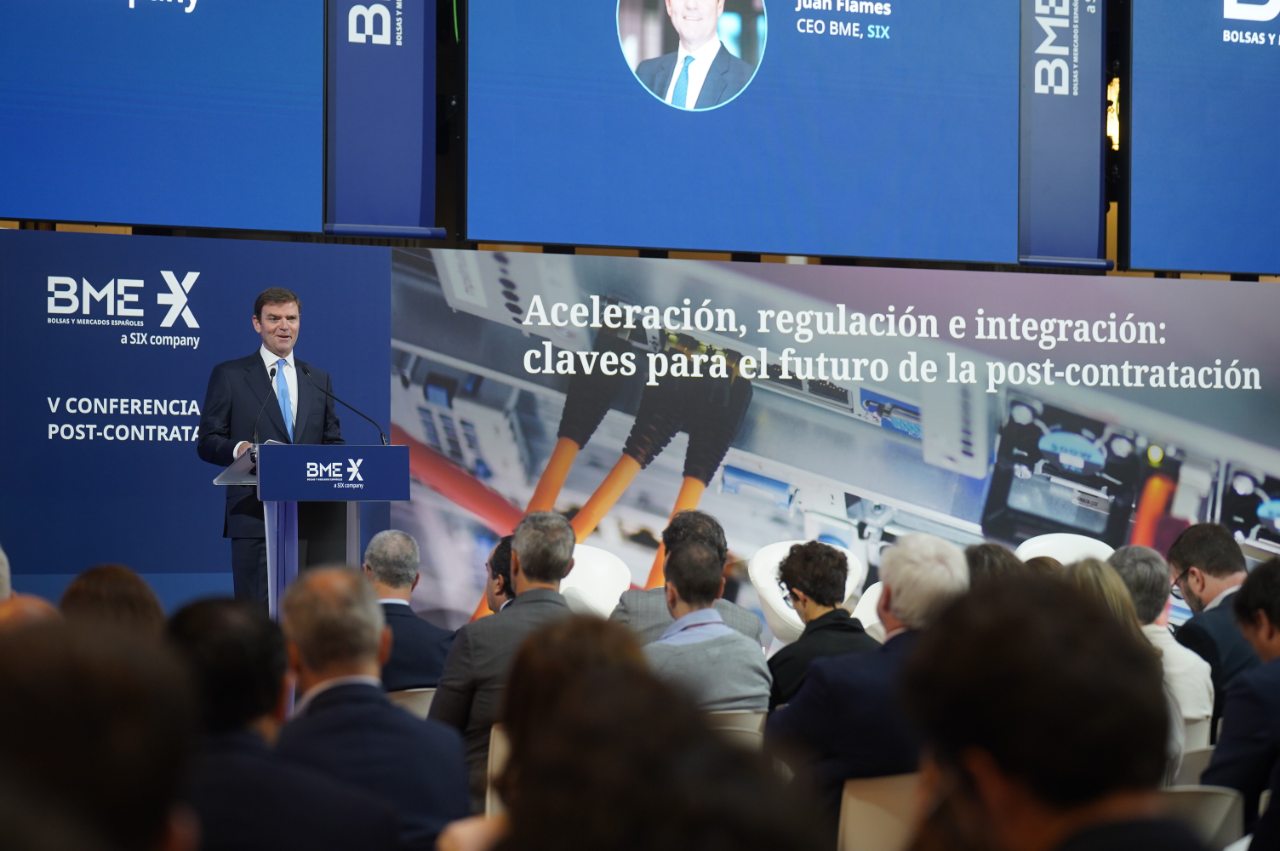
The conference opened with welcoming remarks from Juan Flames, CEO of BME, who highlighted the essential role of market infrastructures as guarantors of the stability, security and efficiency of the financial system. In his speech, he stressed that post-trade is going through a decisive moment, driven by technological acceleration, regulatory changes and the need to move towards greater integration of European markets.
Keynote Speech – Savings and Investment Union (SIU)
The first special address of the day was delivered by Rafael Plata, Secretary General of the European Association of CCP Clearing Houses (EACH), who analyzed the role of the Savings and Investment Union (SIU) as a lever to strengthen European capital markets. During his presentation, he highlighted the importance of strong and efficient post-trade infrastructures to channel savings into investment, as well as the need to move forward with regulatory and operational harmonization among the different Member States. Mr.Plata highlighted that the SIU focuses on three pieces of legislation that directly affect post-trade:
- CSD legislation
- Settlement Finality legislation
- DLT technology legislation
The SIU promotes the connectivity of infrastructures and encourages access between trading platforms, between clearing houses and between settlement platforms. It also proposes that the supervision of significant platforms be centralized at ESMA.
Clearing Roundtable – Evolution towards consolidation in Clearing: access and efficiency
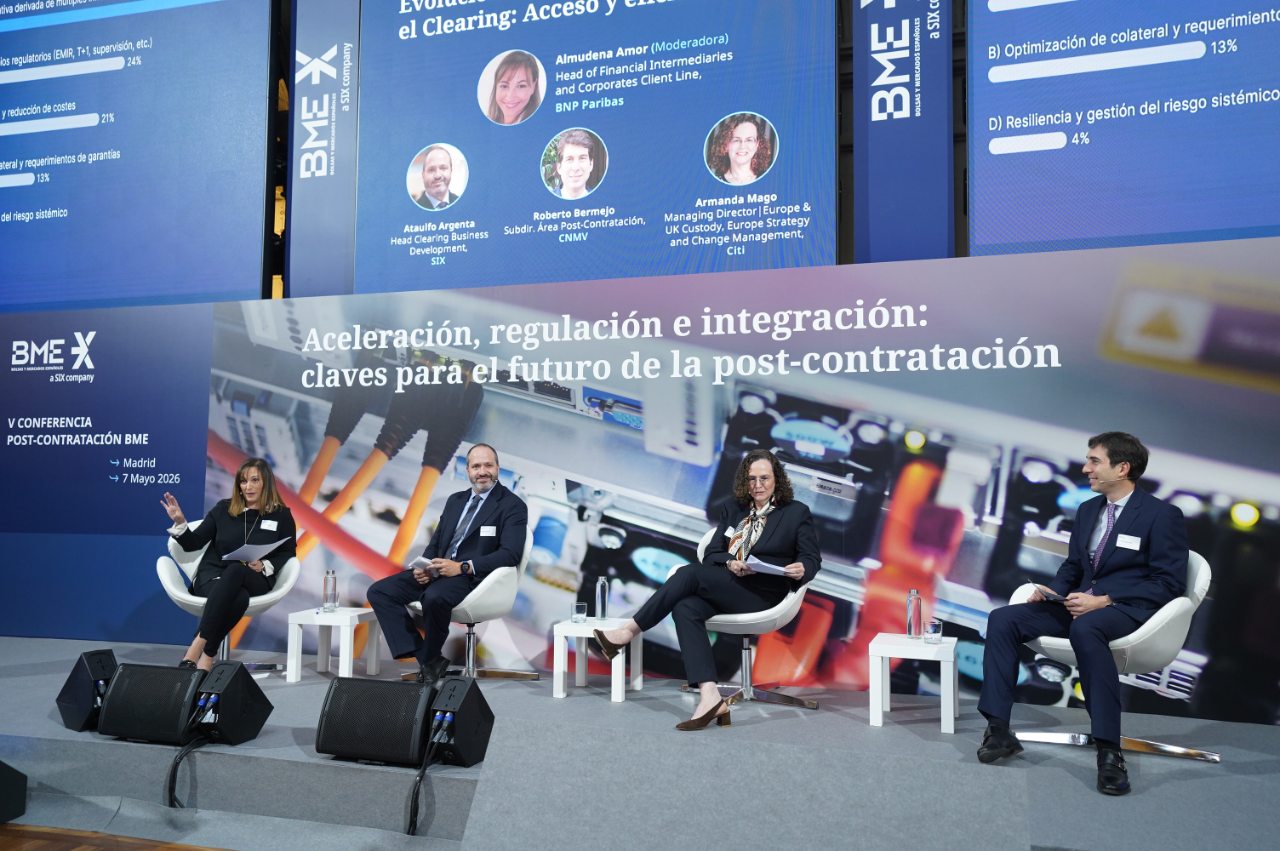
The panel discussion on clearing featured Almudena Amor (BNP Paribas), Ataulfo Argenta (SIX), Roberto Bermejo (CNMV) and Armanda Mago (Citi). It explored the sector’s evolution towards more consolidated, open and efficient models. Participants discussed how consolidation and interoperability can improve access to clearing services, optimize risk management and generate economies of scale. Ataulfo Argenta, Head Clearing Business Development at SIX, highlighted the role of central counterparties as a key element in strengthening market resilience, while also underlining the need to maintain the highest standards of security and regulatory compliance. Efficiency, process harmonisation and the provision of competitive pan-European access are becoming a key market trend, as evidenced by SIX’s decision to bring together SIX x-clear and BME Clearing into a single international, multi-asset CCP.
Fireside chat – Safe and efficient FX settlement in the new T+1 cycle: the FXS solution
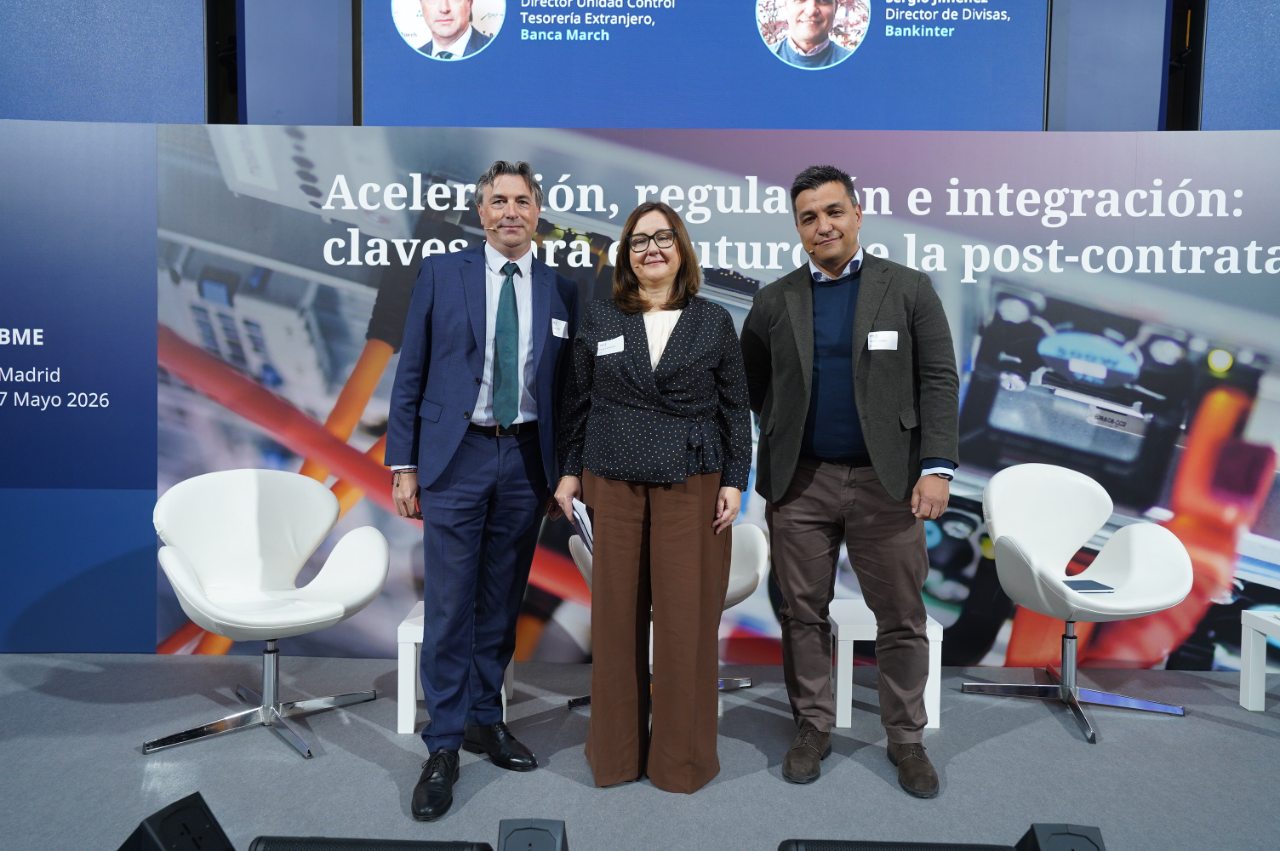
The fireside chat dedicated to FX settlement in the new T+1 cycle featured Paula Fernández (BME), Jeroni Alomar (Banca March) and Sergio Jiménez (Bankinter). The impact of the new T+1 settlement cycle was the central theme of the fireside chat on FX settlement, moderated by Paula Fernández, Head of FXS at BME.
This session examined the main operational challenges arising from shorter timelines, especially with regard to FX risk. The speakers agreed on the importance of having solutions such as FXS that make it possible to manage FX conversion safely and efficiently, thereby enabling an orderly transition to the new operating environment.
Keynote Speech – SIX Securities Services Strategy
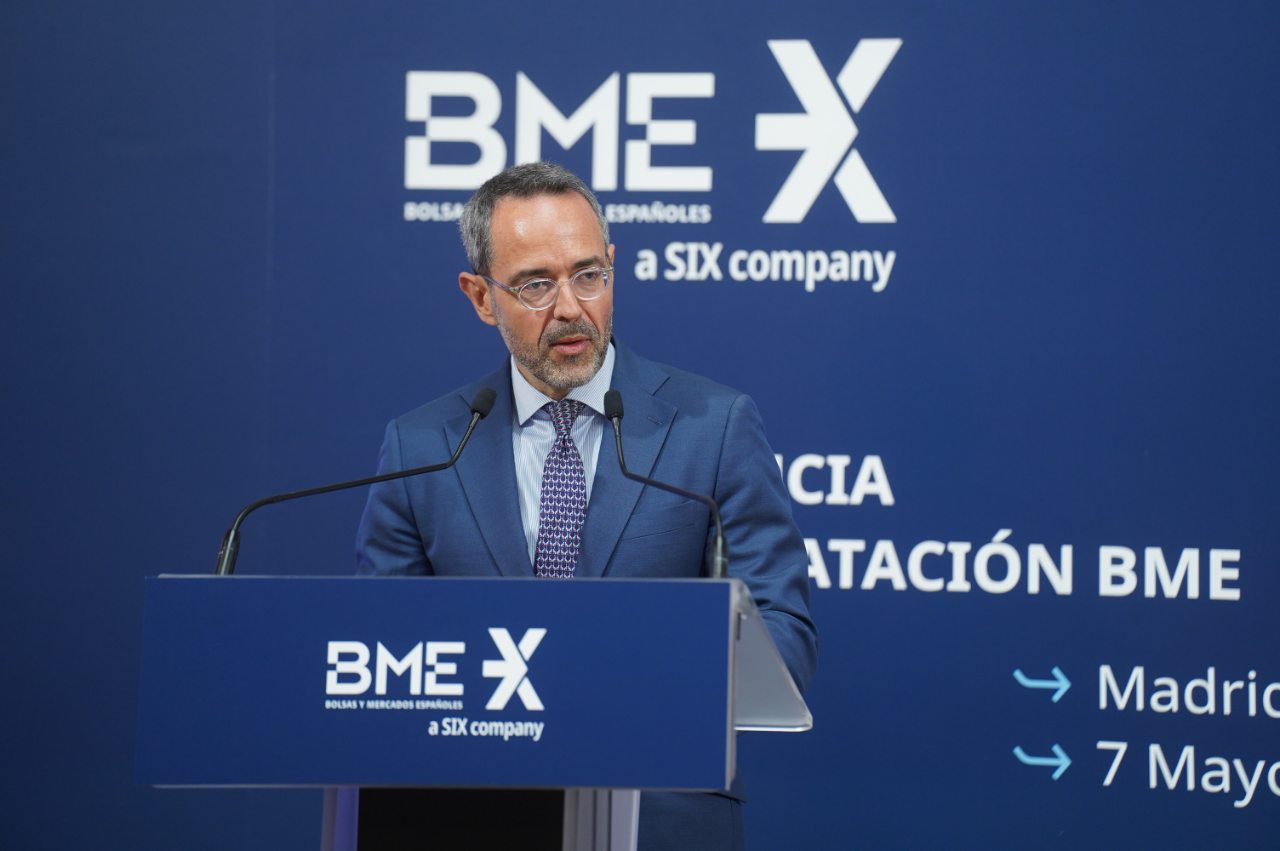
Rafael Moral Santiago, Head of Securities Services at SIX, shared the group’s strategic vision for the evolution of post-trade services. In his presentation, he emphasized the combination of technological innovation, automation and operational resilience as key elements in responding to new market demands, as well as collaboration among infrastructures, financial institutions and regulators as the basis for greater ecosystem integration.
SIX’s vision for 2030 is to transform Securities Services into a pan-European provider of integrated and digital post-trade solutions.
Custody Roundtable – The immediacy of T+1: challenges and opportunities
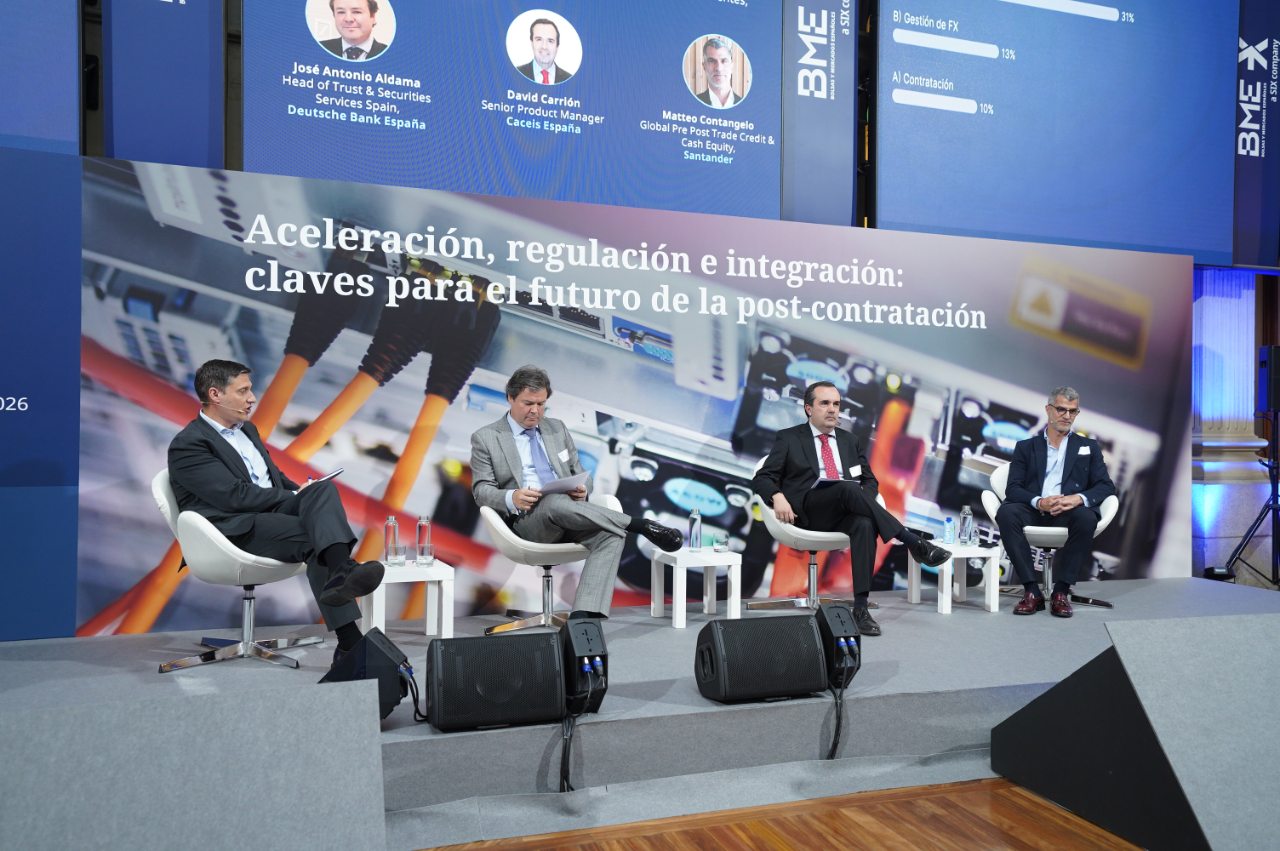
The panel discussion on custody brought together Óscar Mateos (Cecabank), José Antonio Aldama (Deutsche Bank España), David Carrión (CACEIS) and Matteo Contangelo (Santander). It explored the effects of the T+1 cycle from the perspective of custodians and financial institutions. The operational challenges posed by greater immediacy in processes were analyzed, along with opportunities for improvement in terms of automation, operational efficiency, collateral management and data quality. The debate highlighted the need to adapt systems and procedures to ensure safe and efficient custody in an environment of greater speed and higher demands.
For its part, SIX offers its clients a dedicated T+1 webpage to keep them informed about the project’s progress, including the SIX High-Level Impact Assessment, a document that analyzes the impact of T+1 across the entire post-trade chain and the role of SIX as a facilitator of a coordinated, resilient and efficient migration to the new settlement cycle.
Keynote Speech – Regulatory Reporting
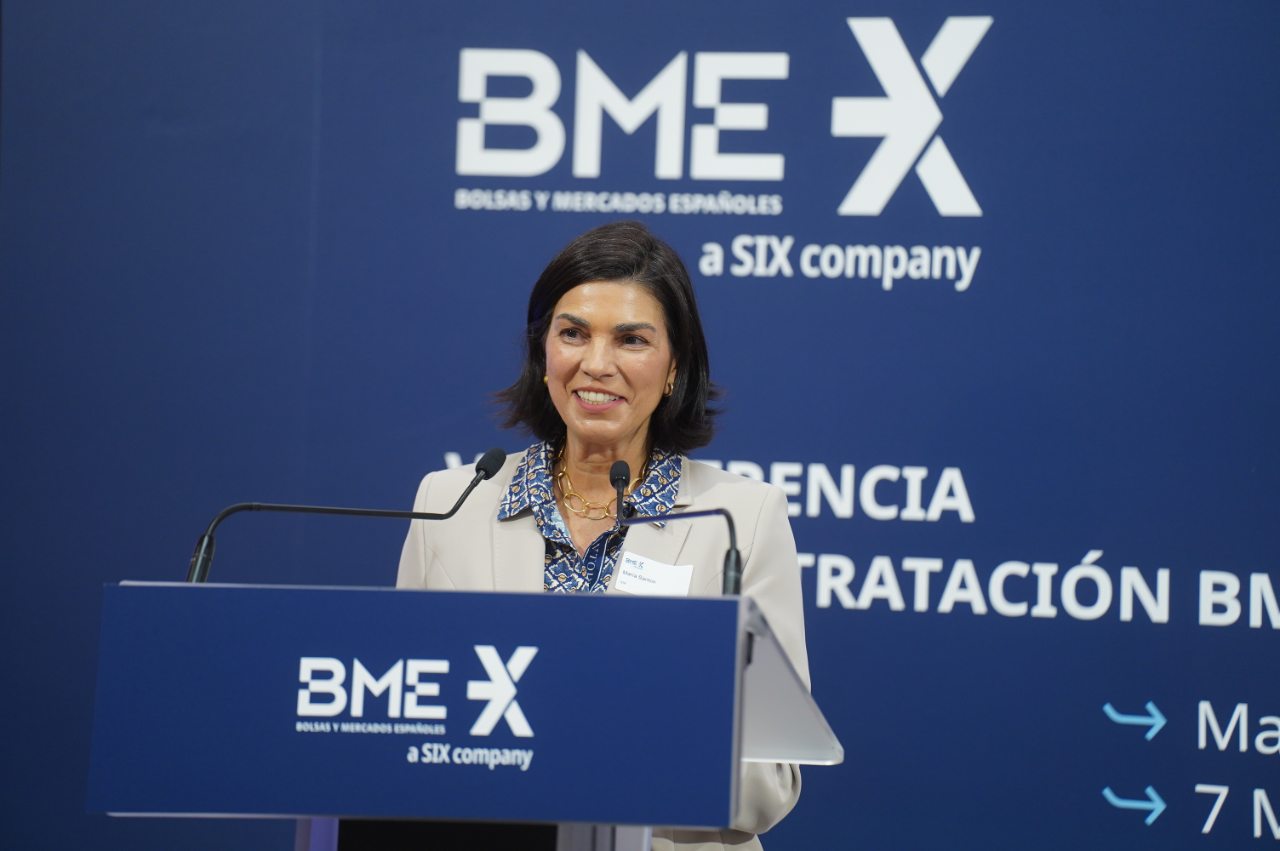
The regulatory dimension was addressed by María Santos, Head of Trade Repositories at SIX, who analyzed the current challenges of regulatory reporting in an environment marked by increasing regulatory complexity. During her presentation, she underlined the importance of data quality, standardization and reuse, as well as the key role of trade repositories in ensuring transparency, regulatory compliance and the stability of the financial system.
Keynote Speech– Pontes & Appia
In the address dedicated to Pontes & Appia, Dimitri Pattyn, Deputy Director General of the Directorate General Market Infrastructure and Payments (DG‑MIP) of the European Central Bank, discussed the European macro-financial context and the role of market infrastructures. He emphasized the importance of having robust and resilient payment and settlement systems capable of adapting to periods of stress and supporting the proper functioning of financial markets.
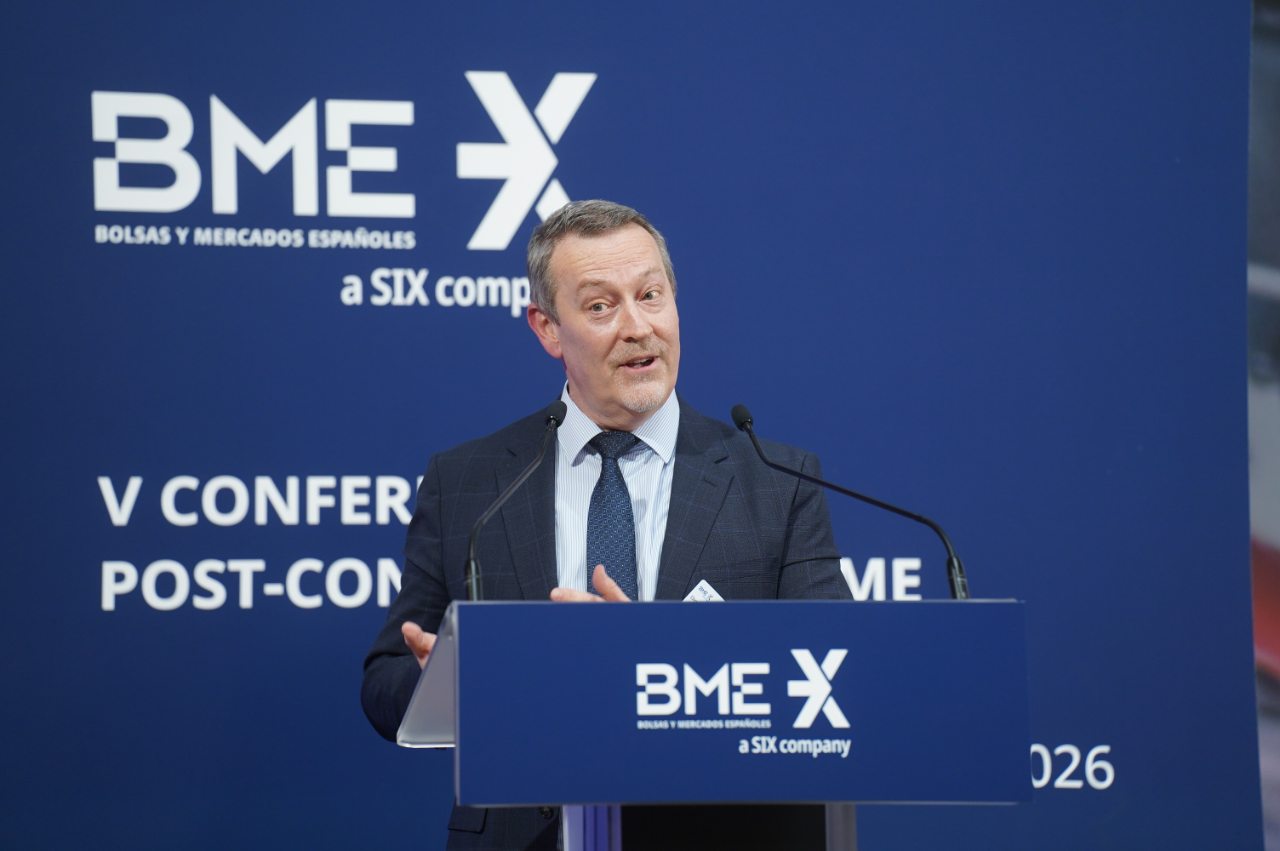
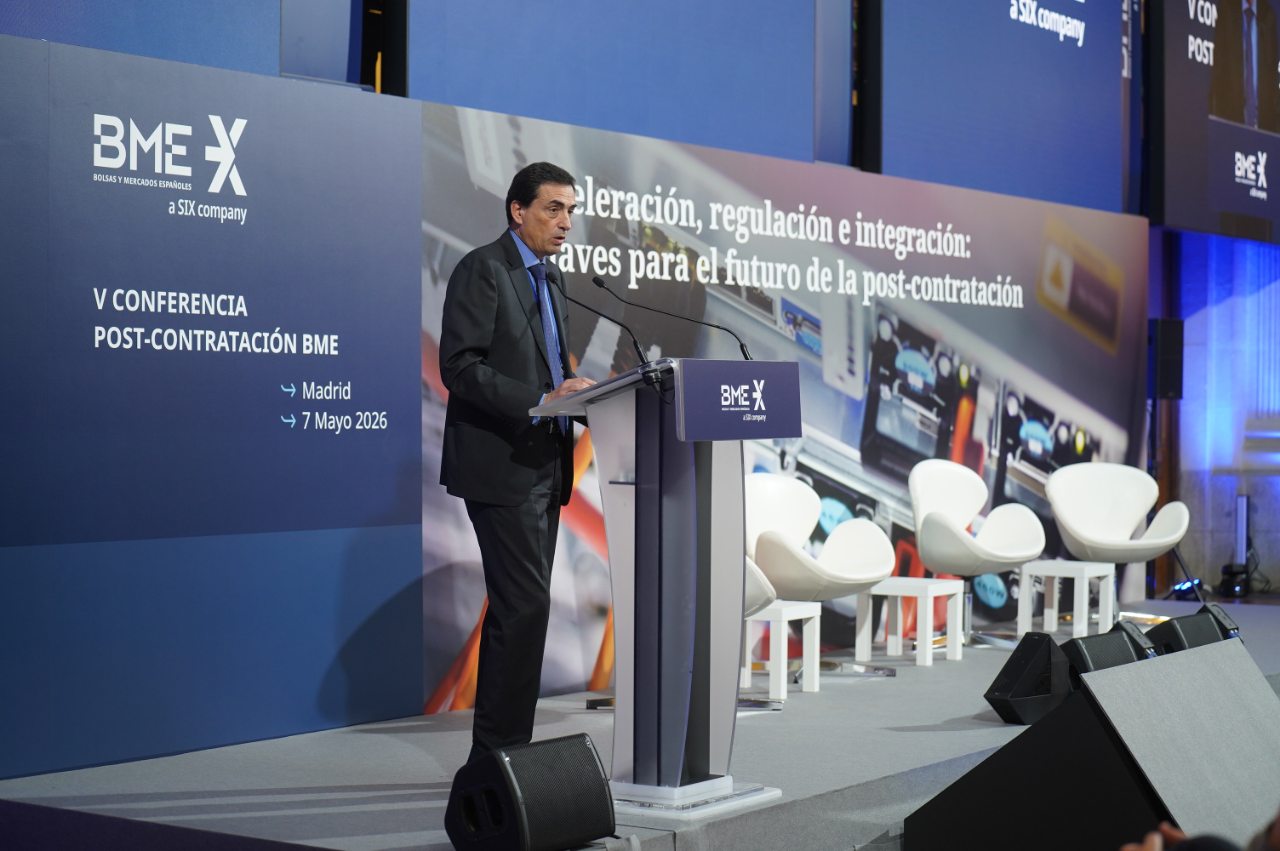
The conference concluded with remarks from Francisco Béjar, Head of Custody at SIX, who underlined the importance of cooperation among the different players in the post-trade ecosystem in order to successfully address regulatory and operational changes. In his closing message, he highlighted anticipation, innovation and collaboration as essential levers for turning current challenges into opportunities for efficiency and growth.
You can view the conference photos at the following link