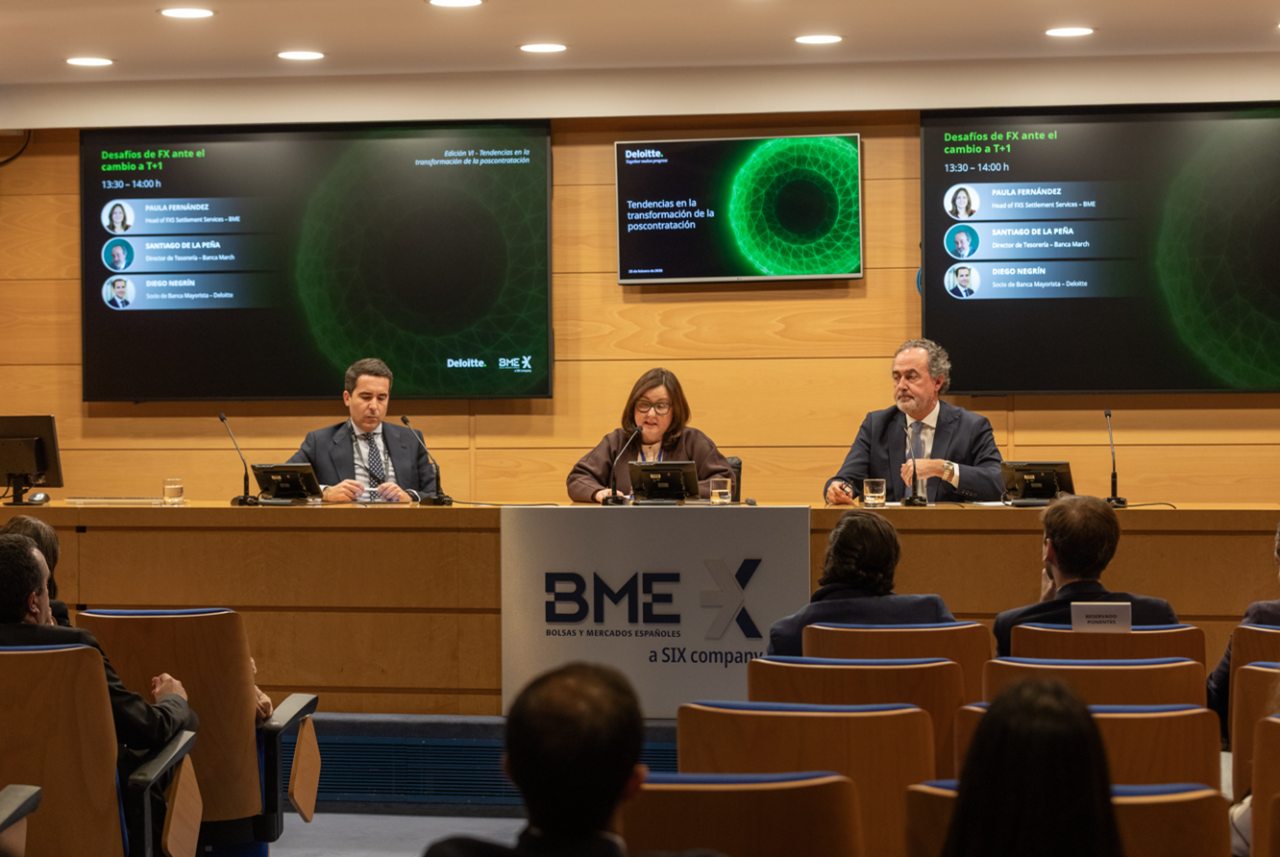


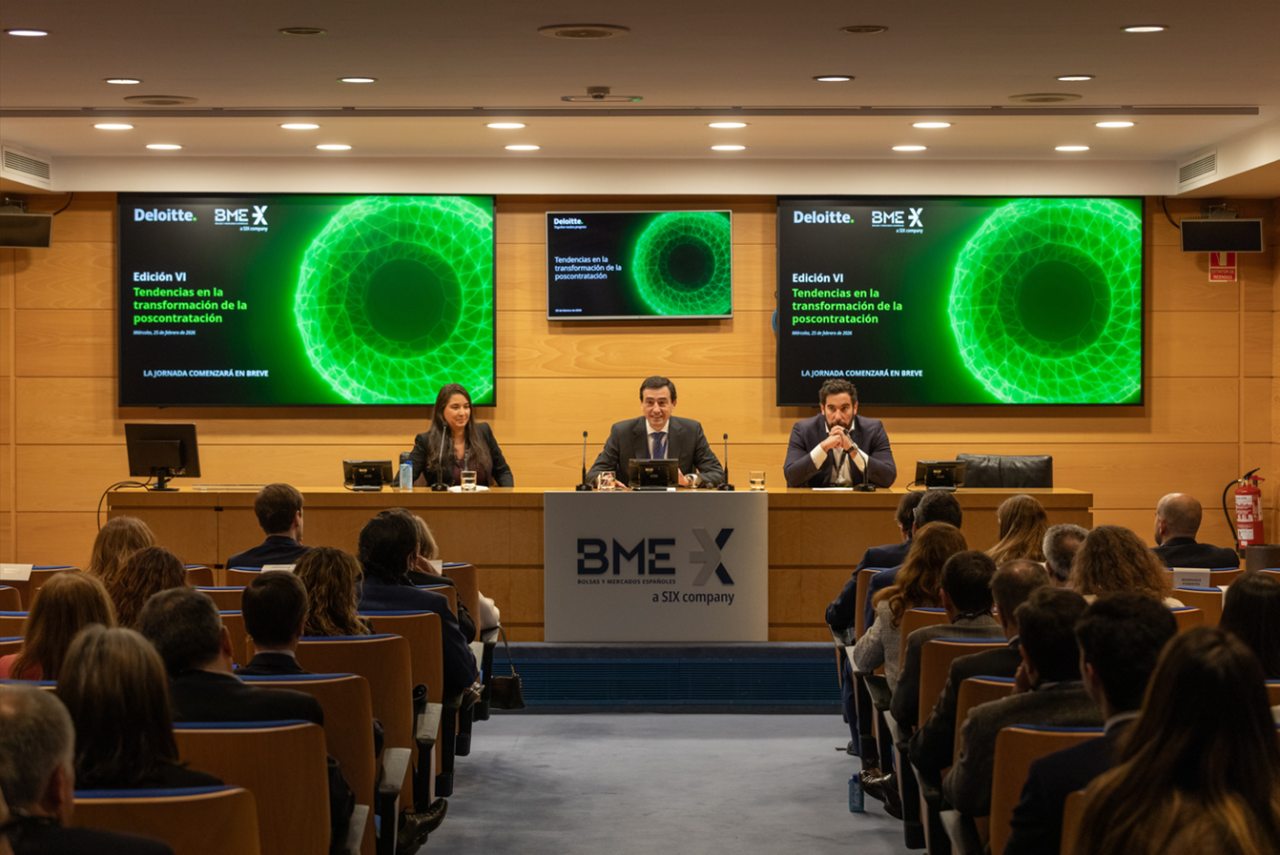
The sixth edition of the conference “Trends in Post‑Trade Transformation,” organized by Deloitte in collaboration with BME and held on 25 February at the Madrid Stock Exchange Palace, brought together professionals from across the financial ecosystem to examine key regulatory and technological developments, as well as the new opportunities arising from asset tokenization and the evolution of digital money in capital markets.
The session opened with a reflection on the moment of profound change that the post‑trade environment is experiencing and the need for a shared industry vision in a context shaped by new regulatory demands, greater competition and accelerated technological transformation. In this context, Francisco Béjar, General Manager of Iberclear, BME, SIX, emphasized that post‑trade is going through an especially dynamic phase, in which innovation, speed of change and digitalization are redefining activity and reinforcing the strategic role of market infrastructures.
The CNMV highlighted the importance of recent regulatory progress —particularly developments linked to the Savings and Investment Union (SIU)— and its cross‑cutting impact on all actors in the ecosystem. The introduction underscored the need for collaboration among supervisors, infrastructures and market participants to face a transformation that affects both the regulatory framework and operating models, setting the stage for the technical sessions of the day.
SIU in a Digital Key: What Is Being Built and What to Expect
Europe is moving toward a more integrated and competitive capital market, reducing fragmentation and strengthening supervisory convergence.
The regulatory framework is adapting to incorporate technologies such as DLT and new settlement models, particularly through the reform of the DLT Pilot Regime, which expands thresholds, removes expiry limits and opens the door to all MiFID instruments.
The shared vision is to promote more modern, interoperable and technologically neutral infrastructures, in a context where Spain is consolidating its position as a benchmark thanks to its regulatory activity and strong public‑private collaboration.
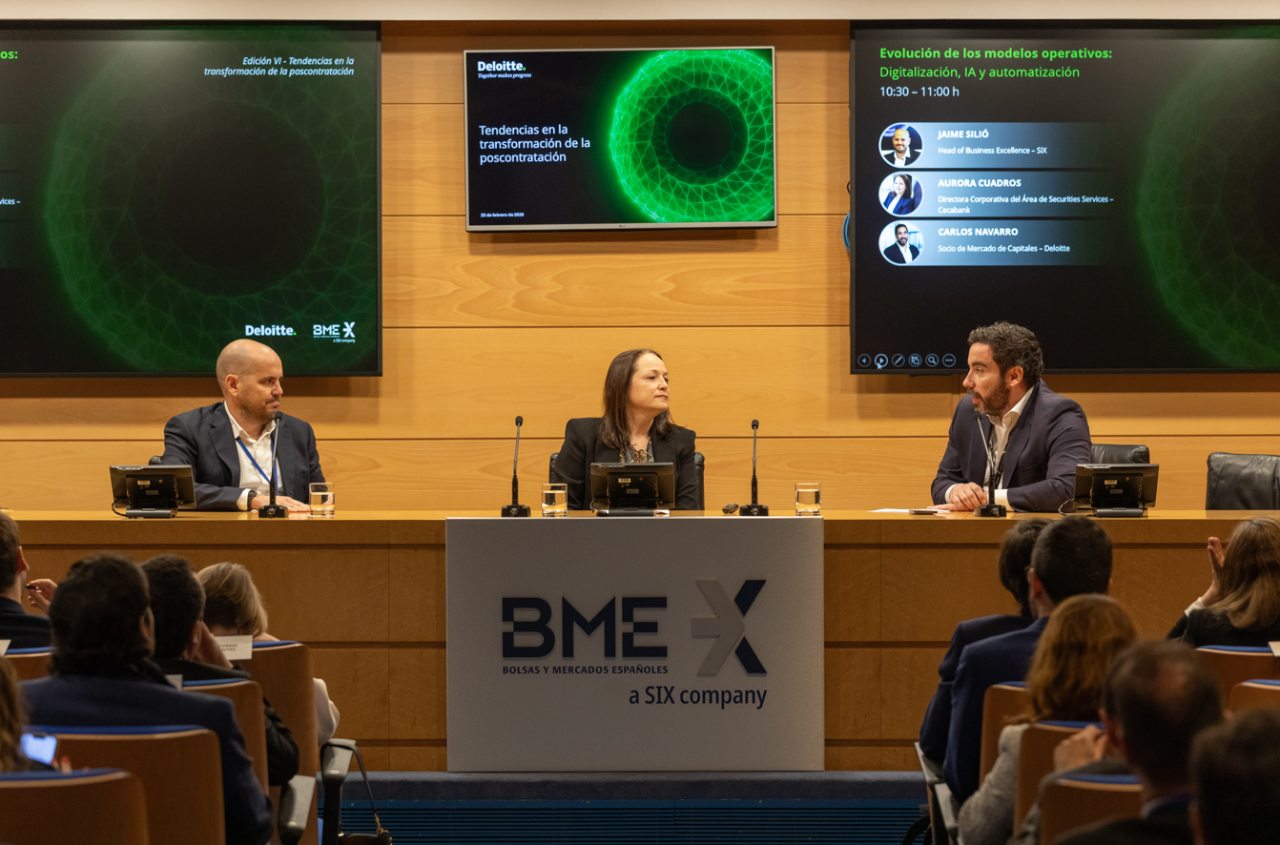
Evolution of Operating Models: Digitalization, AI and Automation
The industry is undergoing a deep transformation of its operating models, driven by regulatory pressure, increasing efficiency requirements and the rapid adoption of advanced technologies.
In this panel, Jaime Silió, Head of Business Excellence at BME, highlighted that artificial intelligence is already delivering immediate benefits thanks to its ability to integrate into existing processes and improve tasks almost invisibly, while DLT technology requires more structural changes that directly affect the foundations of operations.
The operating model is evolving toward end‑to‑end integration, a drastic reduction in manual tasks and near real‑time processing, also reshaping professional roles toward supervision, analysis and risk management.
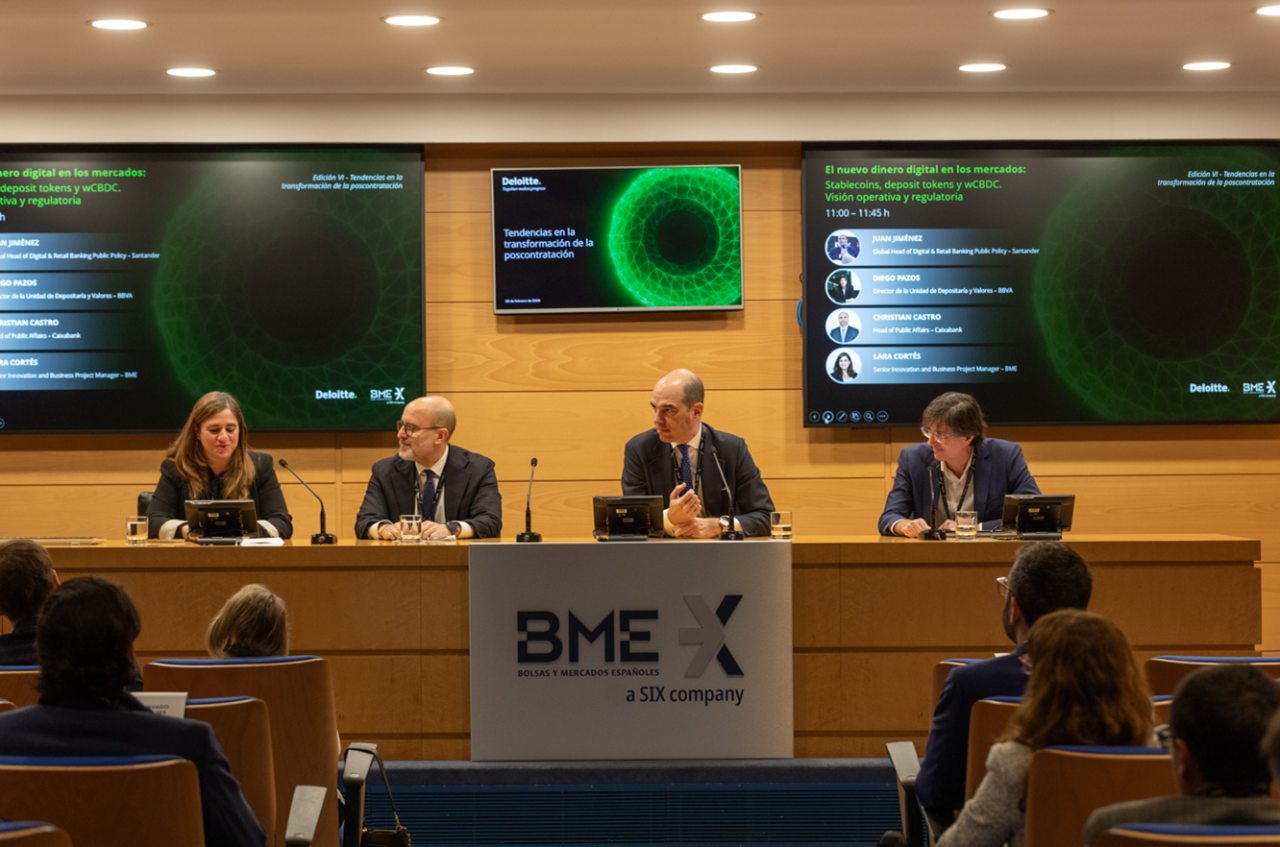
The New Digital Money in Markets: Stablecoins, Deposit Tokens and wCBDC
The different types of digital money —stablecoins, tokenized deposits, deposit tokens and CBDCs— have distinct functionalities and risks and are not interchangeable.
The market is moving toward more robust and regulated models, with a particular focus on issuing euro‑denominated alternatives that can compete with rising global dollarization.
In this discussion, Lara Cortés, Senior Innovation & Business Project Manager at BME, SIX, stressed that the sector has moved from experimentation to real deployments, with tangible use cases showing that tokenization is already part of the industry’s day‑to‑day reality rather than a hypothetical future.
Advanced models such as tokenized repos, on‑chain collateral or atomic settlement are emerging, always under the premise of a regulatory framework that enables innovation without causing inefficiencies or fragmentation.
Tokenization: The Reality for an International Custodian
Tokenization is becoming fully integrated into international custody operations, requiring custodians to operate in hybrid environments—both traditional and on‑chain—while maintaining legal certainty and traceability in both worlds.
Demand continues to grow as markets explore faster and more efficient processes, and regulatory evolution is laying the foundations for scalable, industrial‑grade operating models.
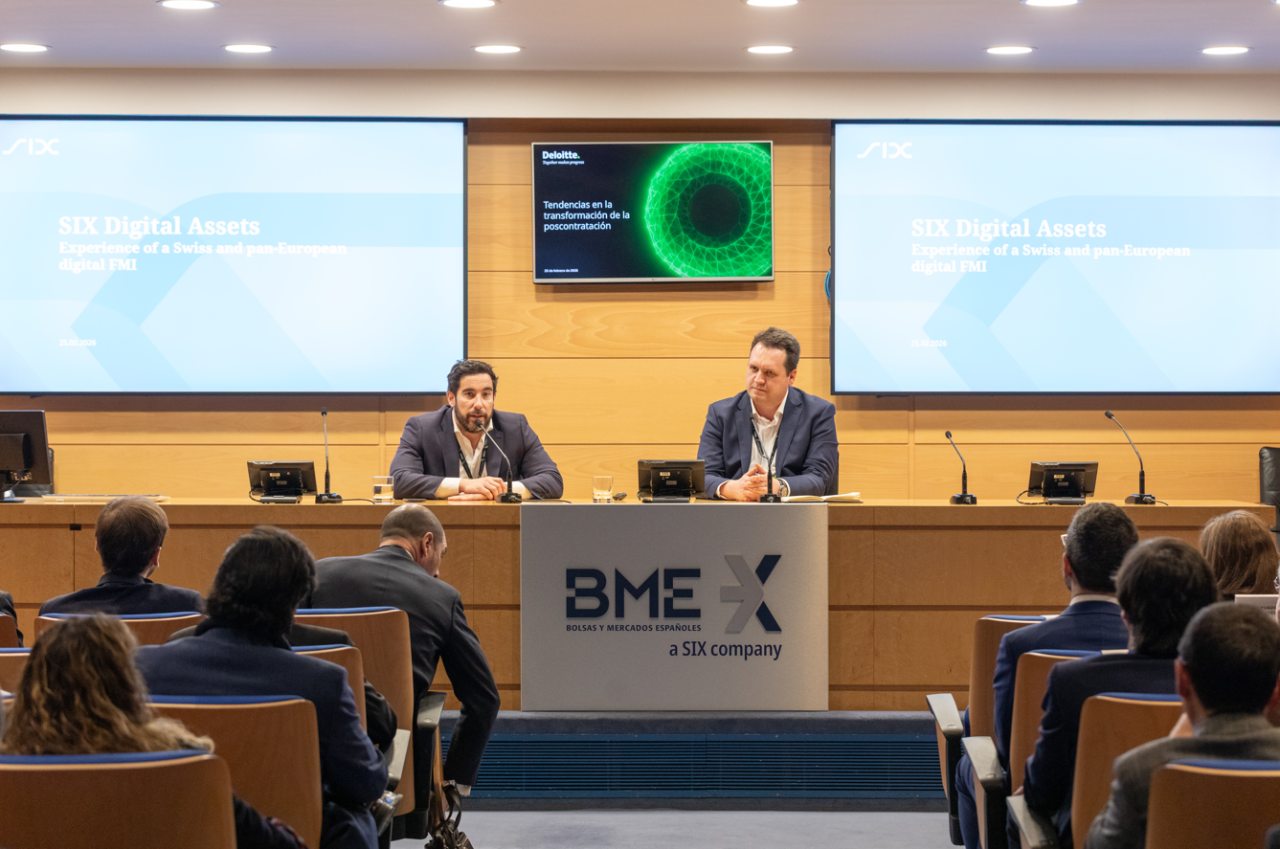
In this context, Marco Kessler, Head of Digital Assets at SIX, contributed a particularly relevant perspective from the viewpoint of an international financial market infrastructure. He shared SIX’s practical experience in Switzerland and Spain, emphasizing that real value emerges when the industry moves beyond pilots and into real, scalable use cases, such as the bond‑fractionalization project developed with clients in production. As he explained, this capability enables portfolio individualization, automation of complex processes such as rebalancing, and the use of technology to solve long‑standing efficiency challenges—demonstrating that tokenization is no longer a theoretical exercise but an operational reality for both infrastructures and custodians.
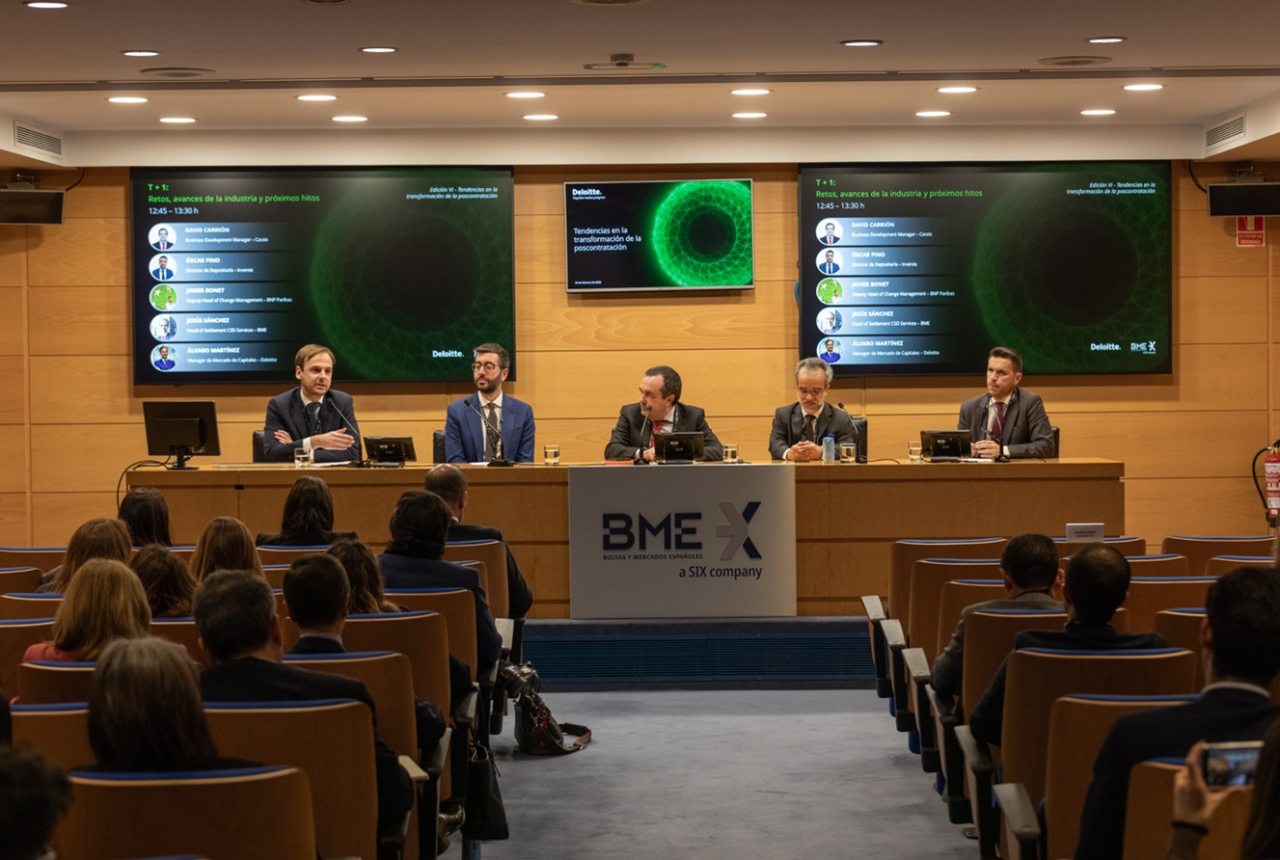
T+1: Industry Challenges, Progress and Next Milestones
The transition to T+1 represents one of the greatest operational challenges for European post‑trade. It requires faster matching, adjustments to overnight processes and performing critical tasks in significantly shorter time frames.
Jesús Sánchez, Head of Settlement Services at BME, SIX, emphasized that the new cycle calls for far more advanced automation capable of executing processes without manual intervention in the early hours of the morning, thereby avoiding additional costs and reducing operational risk.
Partial settlement is emerging as a key mechanism in this new environment, while the industry moves forward with European coordination, joint testing and common metrics to ensure an efficient transition.
FX Challenges Under T+1
Currency‑risk management is one of the areas most impacted by T+1. Institutions will need to calculate positions, execute hedges and settle payments within much narrower windows.
In this context, Paula Fernández, Head of FXS at BME, SIX, explained that BME’s solution helps reduce principal risk through payment‑versus‑payment settlement schemes and synchronization between T and T+1 cycles, providing an extra layer of protection in the event of incidents or defaults.
Automation, intelligent reconciliation and PvP models are becoming essential to maintain efficiency and avoid settlement fails.