

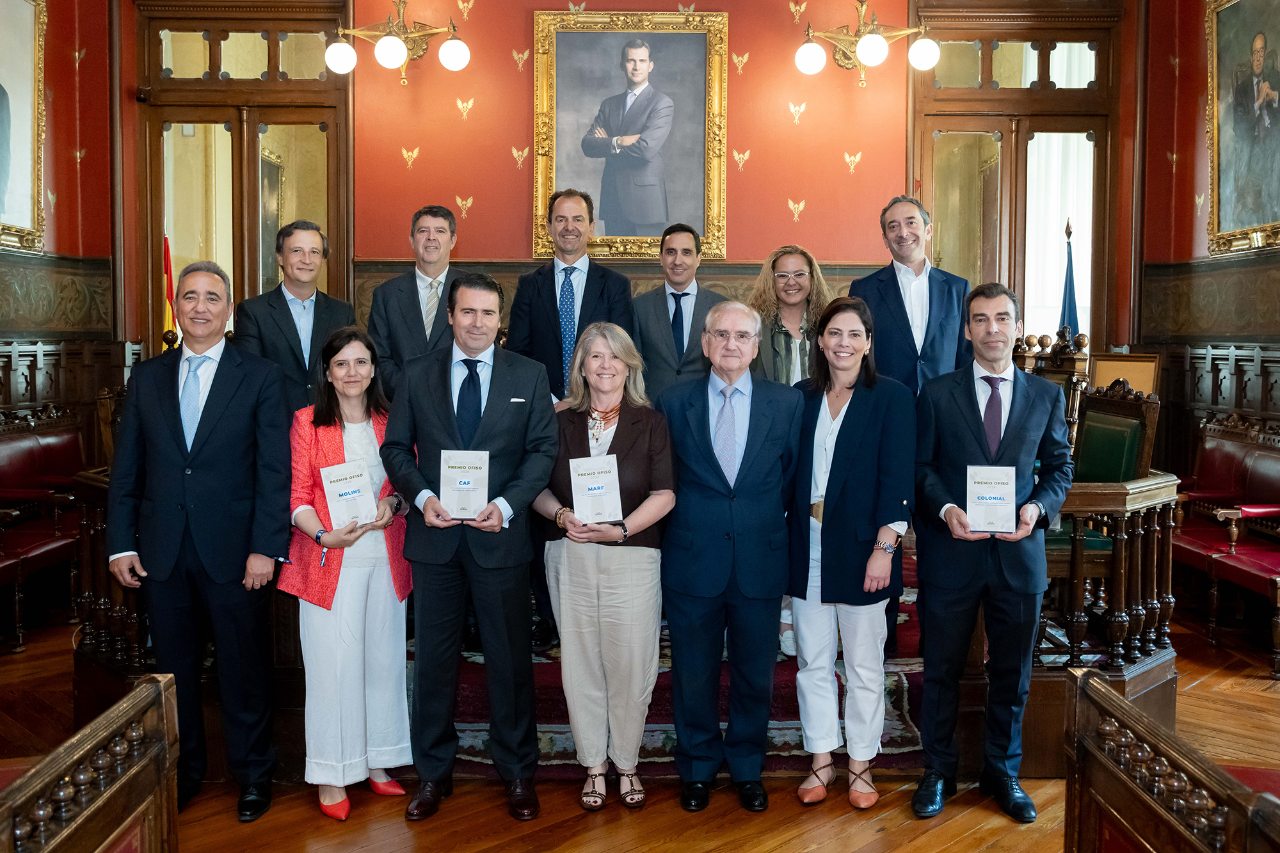
The 7th Annual OFISO Meeting 2026, held last Thursday, May 21 at the Madrid Stock Exchange Palace, brought together more than 250 professionals and leaders from the financial sector to analyze the progress and challenges of Sustainable Financing in a global context marked by climate urgency, the energy transition, and geopolitical fragmentation. Sponsored by BME, EthiFinance, ICO, and ING, the event served as a platform for reflection, debate, and recognition of best practices in sustainable finance.
One of the central moments was the presentation of the OFISO Awards for Sustainable Financing, which recognize the commitment and leadership of companies and institutions in channeling resources toward projects related to sustainability.
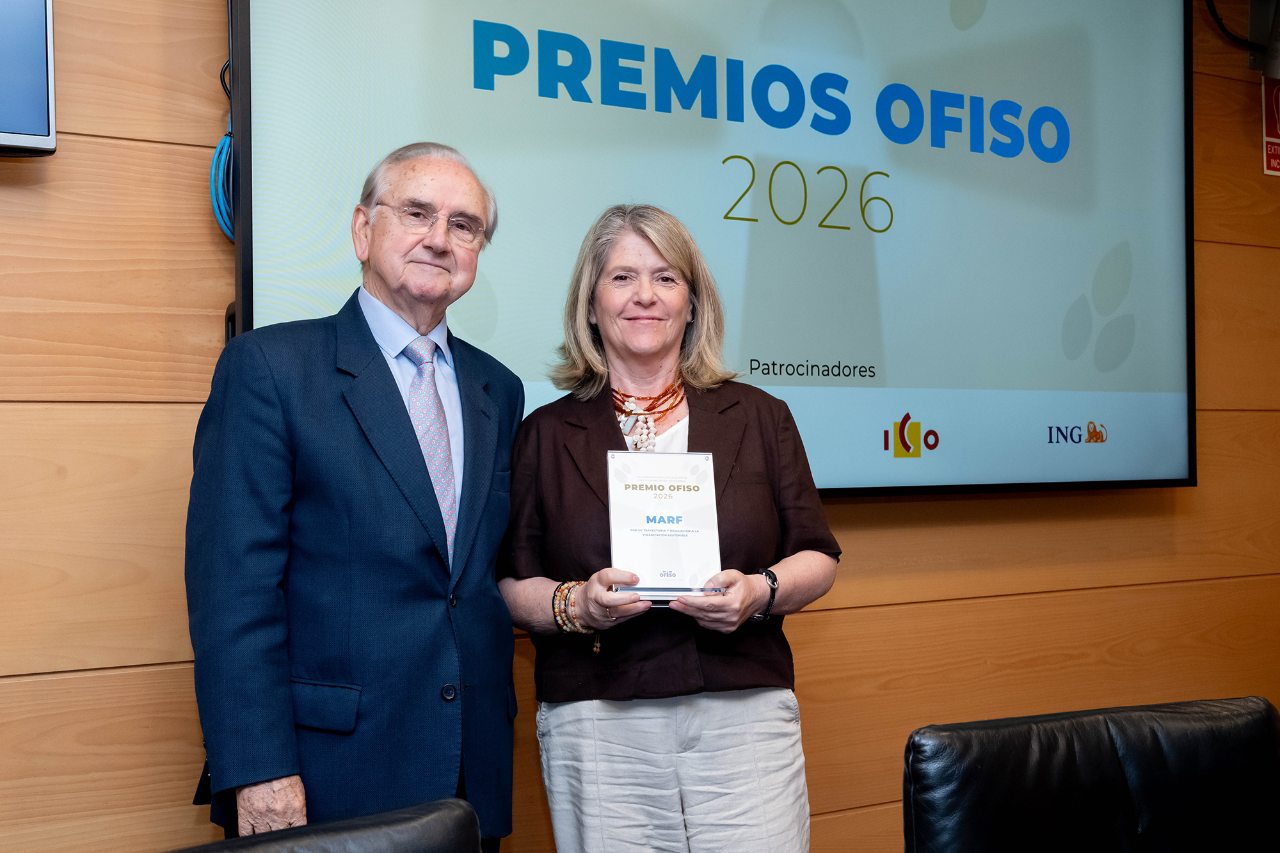
In this context, the MARF Fixed Income market managed by BME was distinguished with the OFISO 2026 Award for its track record and dedication to Sustainable Financing, consolidating its role as a key player in the development of the sustainable financial ecosystem in Spain.
The award highlights MARF’s trajectory as a platform that has facilitated access for small and medium-sized enterprises to debt issuances with ESG criteria, helping to channel investment toward sustainable projects and to promote the growth of green, social, and sustainable bonds in the Spanish market.
Cristina Pamplona, Head of Primary Fixed Income Markets, who received the award, shares more details about MARF and its importance in the market in the following interview:
MARF is a Fixed Income market managed by BME, whose purpose is to promote the diversification of financing for medium-sized companies through debt issuance, which is intended for institutional investors.
Investors in this market have the possibility to diversify their portfolios with a wide variety of products issued by companies that offer a good business outlook.
MARF is in a consolidation and maturity phase.
At this point, we identify strong issuer recurrence, a stable and specialized investor base, and sustained volumes, with a focus on credit quality.
Thanks to the trust of issuers, investors, and all participants in each of the issuances carried out since the beginning of this market, we can say that it is already a consolidated infrastructure within the Spanish financial system.
The development and consolidation of this Market have broadened the spectrum of companies that come to MARF for financing. We can find mid-sized companies, securitization funds, family businesses, and, among other profiles, also subsidiaries of large groups that use financing vehicles to access local investors.
Always surround yourself with strong partners: the registered advisor, legal advisors, the arranger, and, in most cases, a rating agency. All will be essential for the issuer to be ready to go to market.
As for the product, the most common starting point is a commercial paper program, which allows the new issuer to make itself known to investors and thus gradually build investor appetite for longer-term products.
Flexibility, terms, diversification, visibility, governance.
We always stress that the key to a company’s financing should be diversification. Companies go to the market to broaden their sources of financing, not to replace existing ones.
From that point on, those who finance themselves in the market tend not to want to stop doing so. Here they will find flexibility in structuring (volumes, maturities), gain visibility, and expand their investor base.
Sustainable financing finds in MARF an excellent way to connect a committed issuer with an investor interested in building a portfolio based on sustainability criteria.
Sustainable financing is led by companies in the renewable energy and energy transition sector. They are followed by the environmental infrastructure sector (water, efficiency) and, increasingly, industrial and services companies that access this type of financing through sustainability-linked instruments.
The essential element is for the company to build a solid sustainability strategy, supported by a rigorous selection of objectives. From there, this strategy can be validated with a second-party opinion, and reporting commitments must be strengthened.
Ultimately, investors will value the consistency of that sustainability strategy, and the ESG label will serve as its validation.
More issuers, more sector diversity, a broader investor base…
We want MARF to continue being key in bringing market-based financing closer to the Spanish business fabric.
We want new companies from different sectors to approach it and see firsthand the advantages of diversifying their financing sources.
And we want it to continue being increasingly key to the growth of sustainable financing, which is so necessary.
It is essential that it starts by defining a real and measurable ESG strategy and that it can define and identify sustainable projects or KPIs directly linked to its business.
From there, a solid framework validated by third parties can be developed, for example through a second-party opinion. It must also be aligned with sustainability standards.
Finally, it must offer transparency and ongoing commitment. This can be done through the development of an ESG equity/credit story and always with the commitment to provide investors with regular reporting.
Our doors are open to provide the information that a potential MARF issuer may require.
From there, the path toward diversification of financing sources can begin. The issuer will always be accompanied by a registered advisor, who will guide them through the process.
In this regard, MARF has established itself as a particularly relevant channel for sustainable financing, enabling the connection of committed issuers with investors seeking to incorporate ESG criteria into their portfolios.
The recognition from OFISO not only validates this track record but also highlights the role that market infrastructures such as MARF can play in the coming years: bringing market-based financing closer to the business fabric, expanding the investor base, and continuing to act as a catalyst for sustainable financing.
Click here to see the pictures from the event.
¿Do you want to know more?
Contact us, our fixed income team will be pleased to assist you.